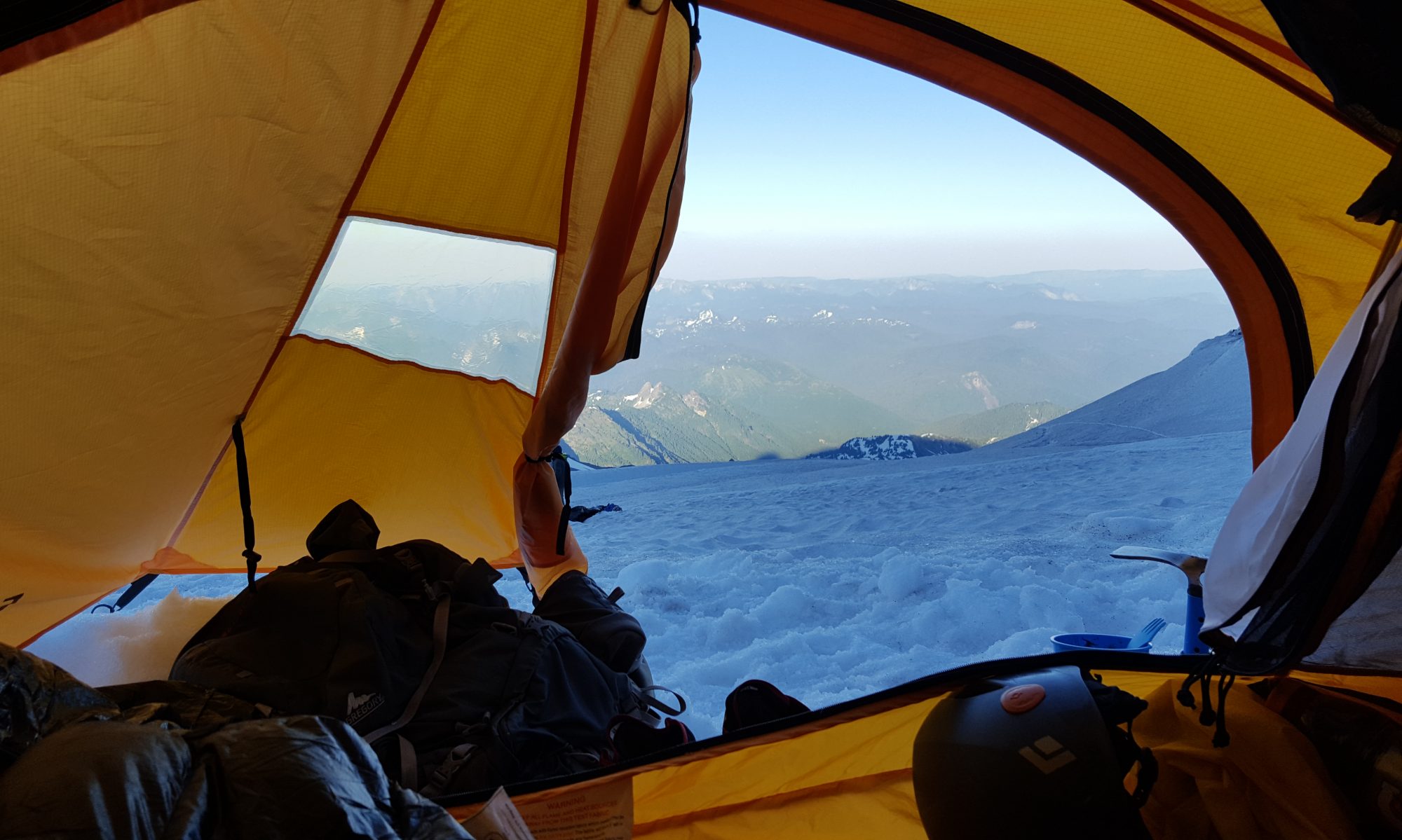
In my last post I detailed the itinerary up Aconcagua but the training to accomplish a climb of this magnitude has been something else entirely. Going mountaineering for 20 days is no small endeavor and there are no porters or assistance after the mule team to base camp. I’ve been told to expect to carry approx. 60lbs per day for the duration of the trip plus or minus some weight here and there. In my post about my climb up Rainier (See Rainer Shine) I mentioned that they had told me to expect to carry 50lbs and I didn’t heed that advice making my trip that much more difficult. For this expedition I’ve decided to leave nothing to chance. I’ve been training to carry 75lbs so that once I’m on the mountain 60lbs will feel like nothing. Hopefully.
Instead of packing all my gear and potentially ruining it I’ve been using climbing ropes, bricks, water, and my down sleeping bag to fill out the dead space in my pack. This is what 75lbs looks like…
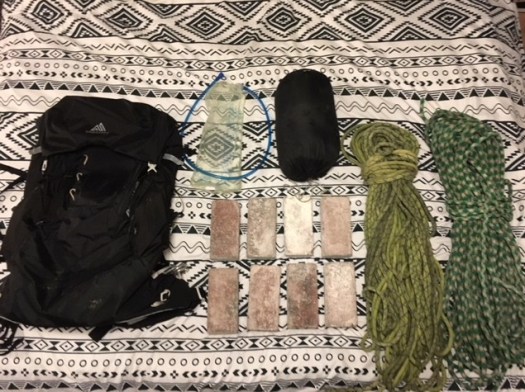
Eight bricks at 5lbs each plus one 60m climbing rope, a 70m climbing rope, 3L of water and my down sleeping bag.
I’ve had to work up to carrying this weight since I had a hard time with 50lbs back in July. After Rainier I gave myself a month of rest and started carrying again at the end of August. I started with 50lbs and bumped it up 5lbs every 3-4 weeks. Along the way I had a few setbacks including the surgery to remove my clavicle plate (see previous post Reducing the Noise) but with only 16 days till I head out I’m feeling like a beast. I’ve been using weights to strengthen my legs and running for cardio but the best training is replicating what you’re going to be doing on the mountain. Living in San Francisco, CA gives me a ton of access to local trails which I consistently hike every weekend while carrying my loads.
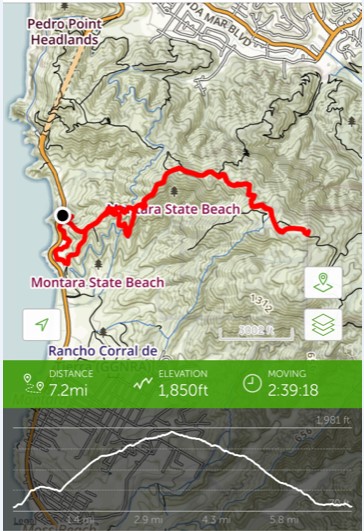
On Aconcagua a typical day after base camp and before summit day is going to involve hiking about 3-4 miles gaining an average of 2,000ft while carrying 60lbs. Of course that’s the average one way trip up to our next camp. Some days we will be carrying high to drop loads at our next camp and coming back down to the previous night’s camp. Those days will have double the mileage I mentioned above. To prepare for this I’ve been training 5 days a week and increasing the weight as I mentioned above. My two weekend days are spent hiking outside and I try to do 5-7 miles with 2,000ft of gain. This seems to be the most elevation I can find here locally in the Bay Area. Weeknights I’m in the gym after work. I climb regularly at a local gym to build my upper body strength but before I climb I’ll wear my pack and do 3+ miles on the stair master aiming for 2,000ft of gain. I look a little nutty for sure but my legs are getting stronger than they have ever been in my life. Sporadically I’ll throw in a 5+ mile run to make sure I’m doing plenty of cardio but I’ve been timing my hikes and stair master sessions to make sure I’m getting not only stronger but faster as well. Summit day on Aconcagua will be roughly 4 miles with almost 4,500ft of gain. It will be one of the longest days of my life but I won’t be carrying anywhere near my heaviest loads.
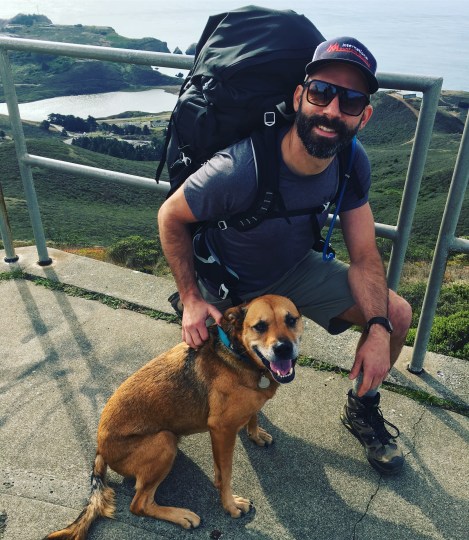
Now that we’ve gotten a bit of snow in the Sierra’s I’ve gone up to Lake Tahoe to do some snow hiking while carrying weight at a higher altitude. Over the New Year’s weekend, I was at Kirkwood in South Lake Tahoe which has an elevation of 7,690ft. This is nothing compared to where I’ll be in a few weeks. Getting some elevation whatever it is will be helpful though when I deal with the extreme elevations I’ll be encountering on this trip.
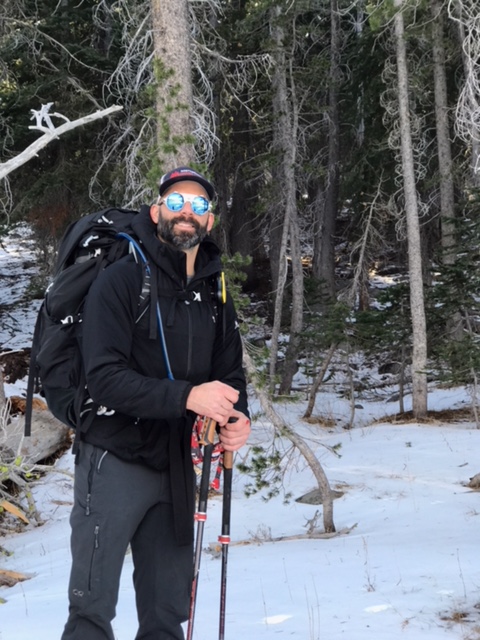
January 24th I fly out to South America so at this point there’s not much left for me to do except maintain the regimen I’ve been on and make sure I don’t injure myself. I’ve started laying out all my gear in my bedroom checking my lists and making sure everything is in place. In my next post I’ll review all the gear I’ll be bringing up the mountain.
 Climbing the 7